

Is a 10-day vipassana silent retreat right for you? Or would a 10-Day Hridaya Silent Meditation Retreat better suit your path?
This article explains the similarities and differences between Hridaya Silent Meditation retreats and the most popular style of vipassana retreat. After reading, you’ll be informed to choose the retreat that feels best to you.
- Overview of Vipassana and Hridaya Meditation Styles
- Vipassana FAQ with Hridaya Comparison
- What to Expect at a Vipassana Retreat
- Schedule and Structure of a Vipassana Meditation Retreat
- What Is Hridaya Meditation: Awareness of Awareness Itself
- What to Expect at a Meditation Retreat by Hridaya
- Schedule and Structure of a Hridaya Meditation Retreat
- Which Meditation Practice Is Right for You?
- Find Meditation Retreats Near You
- Two Paths, One Invitation
Overview of Vipassana and Hridaya Meditation Styles
Vipassana and Hridaya Meditation are two distinct meditation styles that help us uncover the true nature of reality. Both utilize present-moment awareness to free us from suffering, and both incorporate mindfulness of the breathing cycles to illuminate our deepest Self.
Yet, these two traditions lead us to Self-Realization in slightly different ways.
Vipassana comes from the earliest Buddhist teachings. It’s a precise practice of observing reality as it is—moment by moment—without attachment to what arises. Often translated as “insight” or “clear seeing,” vipassana is one of the oldest forms of meditation, dating back 2,500 years. Beyond its history, what makes vipassana distinct is its methodical approach to experience.
When you hear people talk about “doing a vipassana retreat,” they’re likely referring to Vipassana Meditation as offered by S.N. Goenka (1924-2013), an Indian teacher who established a worldwide network of retreat centers.
This article focuses on the most popular 10-day vipassana retreat, offered by Goenka’s organization, dhamma.org. However, you may find shorter or longer retreats offered by other organizations, including the Saddhamma Foundation and the Pa-Auk Society.
Vipassana is popular because it’s a simple method that trains the mind to see clearly.
As you practice vipassana, you’ll become less reactive, gradually transcending your identification with thoughts, emotions, and your body itself.
Through simplicity and focused attention, vipassana trains you to observe yourself and reality as it is—without interference from the ego.
Vipassana helps you realize that everything that arises passes away. All is impermanent. The only constant is change and your experience of witnessing that change.
And so, a deeper question emerges:
“If everything I observe is changing…who or what is aware of that change?”
This is where Hridaya Meditation diverges from other traditions, such as vipassana. Hridaya Meditation focuses your attention not on sensations but on who or what is aware.
Hridaya Silent Meditation Retreats focus on Self-Inquiry—a direct investigation of the nature of Consciousness.
Our retreat participants go on an inner journey using a question that has no intellectual answer: “Who am I?”
By exploring yourself through meditations that incorporate this question, you develop intimacy with your deepest Self. You directly realize your True Nature, which the various traditions refer to as Spirit, Brahman, the Witness, God, or the Infinite.
Hridaya offers 3-Day Silent Meditation Retreats, which are very approachable for beginners, 5-Day Silent Meditation Retreats, and 10-Day Silent Meditation Retreats—the same length as the Goenka Vipassana experience. Regardless of your prior meditation experience, you’re welcome to attend any of these retreats at our centers in Mexico, France, and Romania.
The two paths of Hridaya and vipassana lead to a similar destination: the realization of your deepest essence. Depending on your temperament, beliefs, or simple intuition, one may feel more appropriate.
Vipassana deconstructs your assumptions to realize Pure Consciousness.
Hridaya Meditation directs your consciousness back to what is conscious.
Let’s explore…
Vipassana Meditation Retreats FAQ and Hridaya Comparison
| FAQ | Vipassana Meditation Retreats | Hridaya Meditation Retreats |
| What type of meditation is practiced? | Mindfulness meditation focused on the breath and sensations | Self-Inquiry meditation focused on being aware of the part of you that is aware |
| How long is a silent retreat? | Usually 10 days | Offered as 3-, 10-, and 17-day retreats, with longer retreats available for experienced practitioners |
| What is the typical start and end time of a meditation retreat day? | 4:00 am start time; 9:30 pm completion | 7:00 am start time; 9:30 pm completion |
| Where are Vipassana Retreats held? | Extensive network of centers in India and worldwide | France, Mexico, Romania, online, and offered by teachers at other international locations |
| How long do you meditate at a silent retreat? | A total of 10 hours of meditation or more per day | A total of 6 hours of meditation or more per day, plus Hatha Yoga |
| How do they teach at a Goenka Vipassana Retreat? | Recorded video lectures from vipassana practitioner and dhamma.org founder, S.N. Goenka | Live lectures from our most experienced practitioners about spiritual topics |
| Is a Vipassana Retreat silent? | Noble silence: No talking or direct interaction with others is permitted. | Noble silence: No talking or direct interaction with others is permitted. |
| Can you read, write, or spend time in nature? | Journaling and reading are prohibited; outside time depends on location. | Journaling about your experience is permitted; reading the retreat course booklet is permitted; and beautiful retreat locations allow connection with nature. |
| How much do Vipassana Retreats cost? | Priced on a donation basis—a payment is requested at the end of the retreat, but isn’t obligatory. | The price reflects the direct cost of hosting the retreat and maintaining our centers. Costs vary based on location (France, Mexico, or Romania). Hridaya keeps prices low to maintain accessibility. There are low-income discounts and scholarships for those experiencing financial hardship. |
| Do you stay at the retreat center? | Off-site housing is not permitted. | Off-site housing is permitted. |
| What is the process for booking a retreat? | You must apply to attend a retreat, as they’re in high demand and often fill up months in advance. | You can book directly once reviewing the retreat guidelines and can sometimes find last-minute availability. |
| How do I prepare for a meditation retreat? | While it’s possible to attend a 10-day meditation retreat without prior experience, an established meditation practice will ease your experience. Always follow the recommendations and guidelines of the retreat facilitators. | Prior meditation or yoga experience is helpful but not required. A familiarity with Hridaya’s core teachings can also help you feel grounded. |
| What should I expect from my first Vipassana Retreat? | Intensity, beauty, and rigor! Vipassana Retreats vary based on location. Everyone will have a different experience, but attendees often report strong emotions, physical discomfort, and a deeper opening to their inner life. | Hridaya aims to bring you home to your essence: the Spiritual Heart. Many aspects are similar to other retreats—intensity, heightened emotions, and spiritual transformation—but Hridaya emphasizes a direct connection with the Heart. |
What to Expect at a 10-Day Vipassana Meditation Retreat
The Goenka Vipassana 10-day course is a silent meditation retreat with a rigorous schedule from 4:00 am to 9:30 pm, featuring roughly 10 hours of daily meditation. The day consists of scheduled meditation sessions interspersed with breaks, a basic breakfast, simple lunch, and light afternoon tea, culminating in a daily recorded video talk by S.N. Goenka.
10-Day Vipassana Retreat Daily Schedule
- 4:00 am: Wake-up bell
- 4:30 am: Meditation in the hall
- 6:30 am: Breakfast break
- 8:00 am: Meditation (including group sittings)
- 11:00 am: Lunch break
- 1:00 pm: Meditation (including private practice/rest)
- 5:00 pm: Tea time (fruit for new students)
- 6:00 pm: Meditation in the hall
- 7:00 pm: Teacher’s video discourse
- 8:15 pm: Final meditation in the hall
- 9:30 pm: Lights out/sleep
During the 10 days of this silent meditation retreat, participants refrain from eye contact, talking, journaling, and all other forms of communication. Off-site housing isn’t typically allowed.
Vipassana Retreats are offered by donation. You’re asked to make a donation at the end of your retreat, but doing so isn’t obligatory.
This spartan experience gives you a taste of asceticism—abstaining from worldly indulgences—as it’s been practiced by countless devotees.
You begin simply—with anapana, or concentration on the breath and the sensation of air entering and leaving the body. As the practice deepens, attention expands beyond the breath into full-body awareness, often through a technique called “body scanning.”
As you tune in to the body, you notice subtle sensations: tingling, pressure, pulsing, tightness. What once felt like a solid, continuous “body” starts to reveal itself as a shifting field of sensation, discomfort, expansion, and emotions.
This is the experiential realization of impermanence—something directly felt in the body and mind. Alongside this comes another insight:
If every sensation, thought, and emotion is changing…how could any of it truly be you?
Over time, this leads to a loosening of identification. Thoughts are no longer “my” thoughts. Emotions are no longer “who I am.” They’re simply events, arising and passing in awareness.
This shift is supported by one of vipassana’s central qualities: equanimity.
Rather than chasing pleasant sensations or resisting unpleasant ones, you practice meeting everything the same way—with steady, non-reactive attention. In that non-reactivity, something begins to unwind, and stability begins to emerge.
What Is Hridaya Meditation? Awareness of Awareness Itself
While many aspects of Hridaya Meditation, such as mindful awareness, are similar to vipassana, the principal difference is the use of Self-Inquiry, directing attention to that which is aware.
This “awareness of what is aware” accelerates spiritual transformation remarkably.
When thoughts emerge, we ask “Who am I?” as a way to return to ourselves, to the moment, and to the Spiritual Heart. This question is a wonderment—there’s no rational answer. Rather, it’s a call to embrace our deepest Self.
The roots of this approach are closely linked to the teachings of Ramana Maharshi (1879-1950), the Indian sage who emphasized Self-Inquiry as the most direct path to Self-realization. His central instruction was simple yet radical:
Ask yourself, “Who am I?”—and trace the sense of “I” back to its source: the Spiritual Heart.
The Spiritual Heart—Hridaya—is the living essence of these teachings: our essential and ultimate nature, the Supreme Self, the silent “I” at the core of all experience. It’s not a point in the body, nor merely a symbol of love or emotion, but the limitless field of Consciousness itself, the Divine Reality in which all things arise. And yet, while the Heart cannot be contained anywhere, it can be approached through the Heart Center, a subtle portal in the chest that offers the practitioner a direct way to turn inward.
During a Hridaya Silent Meditation Retreat, you’ll gently rest your awareness in the Heart Center as you inquire, “Who am I?” This focus is not simply concentration on a physical point, but an attitude of surrender, intimacy, and coming home. As the mind grows quiet, the Heart Center becomes a doorway into the boundless Spiritual Heart, and the answer to the question emerges as the living recognition of Being itself—your deepest nature, continuous with and inseparable from the Divine.

The Three Technical Aspects of Hridaya Meditation
Hridaya Meditation includes three technical aspects, but they are not ends in themselves. They are tools—sacred supports that help orient the mind and heart toward that which cannot be reduced to technique.
- Awareness of the Heart Center: Resting your awareness in the Heart Center invites a sense of deep intimacy, surrender, and “coming home.” Beyond concentration on a point in the chest, this is a way of turning inward toward the source of the “I”-feeling. The Heart Center serves as a subtle portal to the Spiritual Heart—the boundless Reality that different traditions have called God, Spirit, Brahman, the Self, or Consciousness.
- Awareness of the Pauses After Each Inhalation and Exhalation: Within every breathing cycle, there are natural moments of pause. By becoming aware of these pauses, you can open to the background of Stillness that’s always present.
- Self-Inquiry: The wonderment-question “Who am I?” is brought into the Heart as a sacred invitation to turn awareness back toward its source rather than a puzzle for the mind to solve. Notice who is asking the question, who is distracted by thoughts, who feels the sensations of the body, etc. As the inquiry deepens, the question becomes less conceptual and more direct, revealing the mystery of the one who is aware. In this recognition, meditation opens beyond duality—beyond seeker and sought—into the living presence of the Self.
What to Expect at a Hridaya Meditation Retreat
A 10-Day Hridaya Silent Meditation Retreat includes meditation throughout the day (starting at 7:00 am), interspersed with gentle Hatha Yoga and time for personal practice. The total meditation time is about six hours per day.
Schedule and Structure of Hridaya Silent Meditation Retreats
- 6:30 am: Wake-up bell
- 7:00 am: Meditation (beginning in shorter segments and building to a two-hour session)
- 9:00 am: Breakfast break
- 10:00 am: Relevant lecture
- 11:15 am: Hatha Yoga
- 12:30 pm: Meditation
- 1:00 pm: Lunch and rest break
- 4:00 pm: Meditation
- 6:30 pm: Personal practice and dinner
- 7:30 pm: Q&A via written questions
- 8:00 pm: Spiritual lecture
- 9:00–9:30 pm: Meditation
As in a Vipassana Retreat, participants refrain from speech and other forms of communication, but they’re encouraged to journal about their experiences. Depending on the location, Hridaya retreat participants may be able to arrange their own off-site housing.
Hridaya keeps prices low to maintain accessibility, with our fees reflecting what it costs to host retreats and maintain our centers. For some, a 3-Day Silent Meditation Retreat may be more financially accessible. Low-income discounts are available for all of our programs, and scholarships are offered for 10-Day Silent Meditation Retreats. Find out more about financial aid options on our registration guidelines pages for Mexico and France.
A Hridaya Silent Meditation Retreat, though intensive, emphasizes gentleness toward yourself, with rest, nourishing cuisine, and a retreat container that encourages you to go inward and reconnect with your True Nature—the Spiritual Heart.
“I came to my Hridaya Meditation Retreat feeling very disconnected and unclear about my life direction. The Self-Inquiry method ‘unwound’ so much for me! I didn’t realize how much baggage I was carrying! I’m feeling refreshed, centered, and motivated now, and am so appreciative of the teachers and community. Thank you!”
–Jack B., 10-Day Hridaya Meditation Retreat participant
Each day concludes with a satsang, or “wisdom talk,” during which students can submit written questions to the teacher. The daily schedule concludes around 9:30 pm.
Students appreciate the supportive atmosphere of Hridaya Silent Meditation Retreats, noting the Heart-centered approach, profound teachings, and opportunities for both restoration and transformation.
Which Meditation Practice Is Right for You?
Vipassana May Be a Better Fit If:
- You want structure, discipline, and a straightforward method of meditation
- You desire a classic experience similar to that in an Indian ashram
- You simply feel called to vipassana!
Hridaya Meditation May Be a Better Fit If:
- You want to connect more deeply with the Spiritual Heart
- You’re drawn to the non-dual teachings or Hatha Yoga, which is also practiced at Hridaya
- You long for meaning, intimacy, or a sense of wholeness
Meditation Retreats Nearest You
Location will no doubt influence your retreat choice, either for reasons of travel convenience or because you desire a particular setting.
You’ll find vipassana courses worldwide, with great variation in settings and accommodations. The 10-day structure of S.N. Goenka is most common; other Buddhist lineages may offer vipassana retreats near you as well.
Hridaya operates non-profit retreat centers in three countries, each set within a distinct environment that enriches the meditative experience.
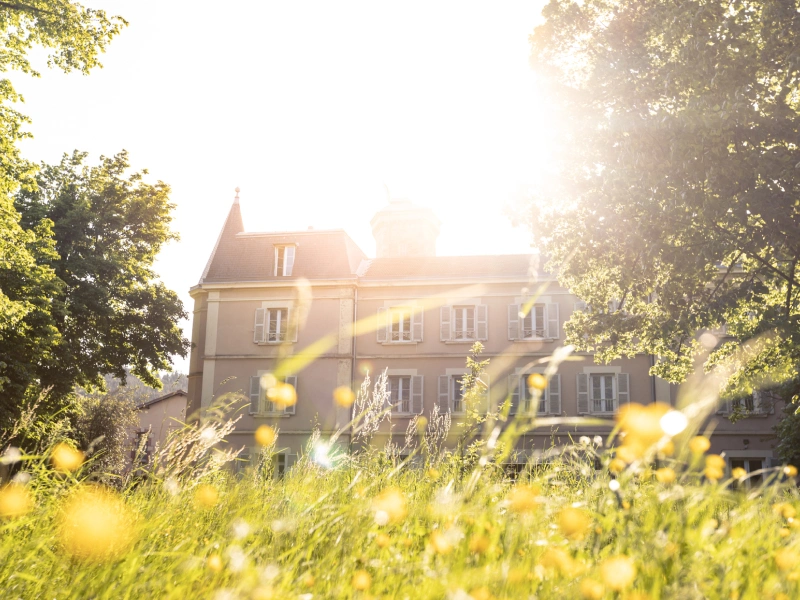
Hridaya Yoga France
Hridaya Silent Meditation Retreats in France bring you to stillness in the quiet of the Beaujolais countryside. Far removed from the busyness of daily life, our French location offers miles of hiking trails, a permaculture garden, and views of the Azergues Valley.
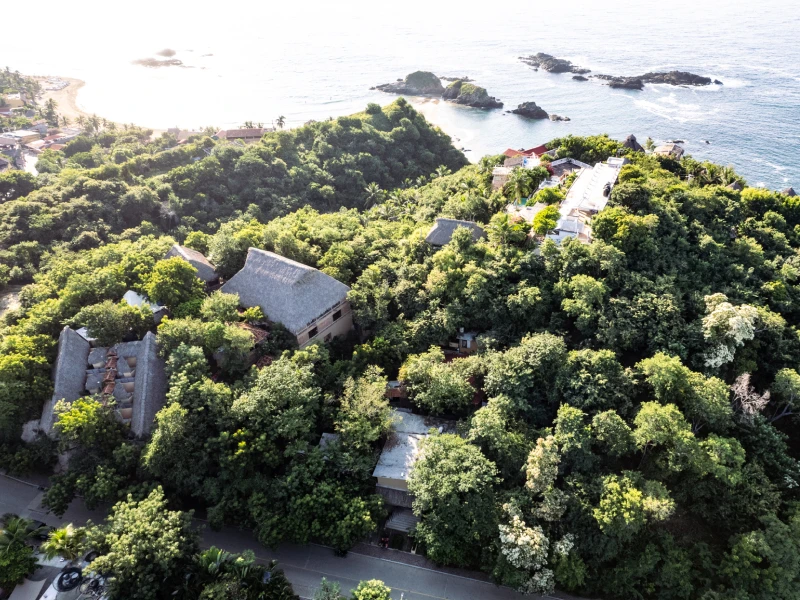
Hridaya Yoga Mexico
Hridaya Silent Meditation Retreats in Mexico drop you into the color and tropical beauty of the Oaxacan coast. This center, located in the small town of Mazunte, is a fantastic choice for those seeking beachside adventure not far from the USA and Canada.
Hridaya Yoga Romania
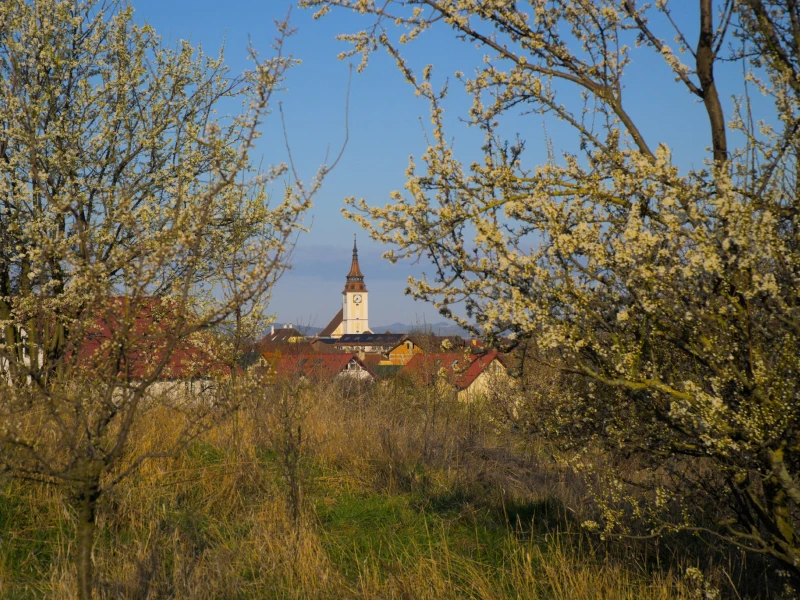
Hridaya Silent Meditation Retreats in Romania introduce you to the wooded foothills of the Carpathian Mountains. Located just outside Brașov in the heart of Transylvania, the Hridaya Kamala Center offers mountain views and the quiet of a region steeped in natural beauty.
Online Meditation Retreats
Alternatively, you can try one of our online silent meditation retreats. In this format, you’ll follow along with a livestream of an in-person retreat. You’ll receive the teachings and ask the retreat leader questions just like the other participants—but from the comfort of your home. The peace you seek is inside; there’s no need to travel elsewhere.
Two Paths, One Invitation
Vipassana, Hridaya Meditation, and all of the world’s wisdom traditions lead to the same place. Whether you call it God, Emptiness, Spirit, or Source—all is One.
Choosing the best meditation retreat for you, at this stage in your journey, is an important first step.
Vipassana holds you in your experience until nothing you see can define you.
Hridaya Meditation turns you around completely and asks you to recognize the One who has been here all along.
One method watches the waves. The other asks, “What is the ocean?” until it’s revealed to be you—inseparable from the Heart.
Blessings on your journey.