Bhutas—The Building Blocks of the Cosmos
Bhuta means “material element” and signifies the five gross elements that compose the material Cosmos—the mahabhuta or pancha bhuta (pancha means five).
The Five Bhutas Are:
- Akasha (Ether)
- Vayu (Air)
- Tejas or Agni (Fire)
- Apas (Water)
- Prithivi (Earth)
Akasha
Akasha means “radiance” and refers to Ether, the most subtle of the five elements. The word derives from the Sanskrit root kas, meaning “to be visible” or “to shine”—akasha shines in all directions. Akasha also signifies Infinite Space, the sky, and infinity. Beyond its physical designations, akasha is another name for Brahman (the Supreme Reality).
Vayu
Vayu means “air,” “breath,” or “wind,” and refers to the Air element. According to the yogic tradition, there are five vital airs in the human body that represent five important forms of energy. This energy manifests both in the being and in the entire Universe. These prana vayus govern different areas of the body and various physical and subtle activities. Through the practice of yoga, the subtle aspects of the vayus begin to awaken and we become aware of a wider spectrum of their functions and effects. Although becoming aware of the five vayus can aid our understanding of the physical and subtle realms, we always remember that what we are seeking is beyond these levels.
Tejas or Agni
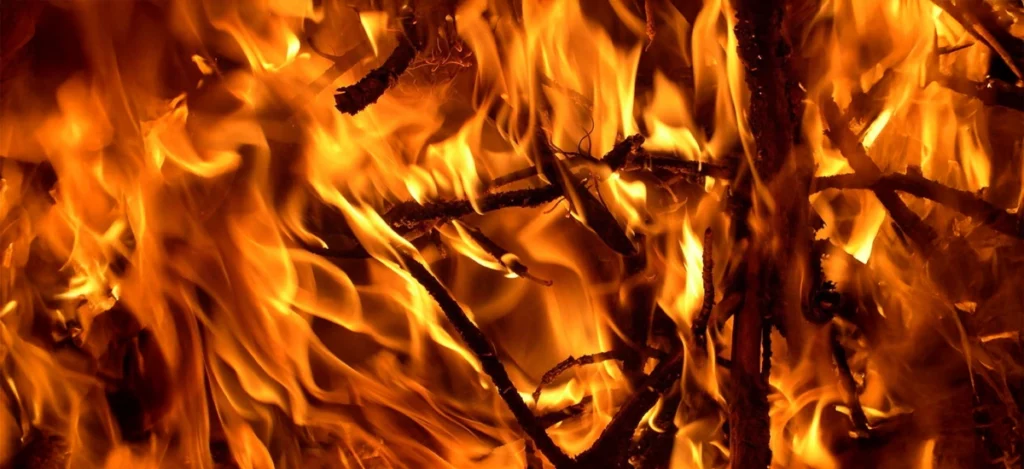
Tejas is the Fire element, also called agni. Tejas means “brilliance,” and is known to be the effect of intense sadhana (spiritual practice)—the brilliant countenance of a saint. However, the Tejo Bindu Upanishad (1:41) lists tejas (in the sense of overexcitement) as one of the nine obstacles on the spiritual path. The symbol of Tejas tattva is a red triangle pointed upward. It is associated with manipura chakra.
Apas
Apas, the Water element, is the source of the five bodily liquids: saliva, urine, semen, blood, and perspiration. Its symbol is a silver or white crescent moon. Apas tattva is associated with svadhisthana chakra.
Prithivi
Prithivi, the Earth element, is the grossest of the material elements. According to Kashmir Shaivism, there are thirty-six tattvas (categories of existence). Prithivi is the thirty-sixth (the most material) and Shiva (Pure Consciousness) is the first (the subtlest)—essentially, our journey to Pure Consciousness begins from Earth. It is the element that corresponds to muladhara chakra, “the root support.” It brings solidity, stability, permanence, patience, fertility, security, and rigidity. The physical body is a direct manifestation of prithivi tattva. In the body, it predominates in the solid structures—the bones, muscles, cartilage, nails, hair, and teeth. At a subtler level, it is where consciousness fully takes form and solidifies. The Earth element is considered to be the foundation of all other elements and of manifestation itself. Its symbol is a yellow (or clay-yellow) square.
Learn more about the five elements in the Hridaya Yoga Retreat: Module 1 Intensive.
Image credit: MarcusObal [CC BY-SA 3.0]