

Samskaras and Vasanas Subconscious Tendencies

Samskaras and Vasanas Subconscious Tendencies Samskaras—Psychological Imprints Samskara (or sanskara) means “activator” and refers to psychological imprints left in the subconscious by our daily experiences—whether conscious or unconscious, internal or external, desirable or undesirable. The term “activator” suggests that these imprints are not merely passive vestiges of our actions and intentions, but dynamic forces in…
Samadhi Ecstatic Union

Samadhi Ecstatic Union Samadhi—Merging into One Samadhi means “to place together.” The term refers to the state in which the subject (the meditator) and the object (of meditation) merge into one. It is the ecstatic condition in which the limited sense of individuality fades away. This is the last anga (limb) of the eightfold path…
Purushartha The Four Aims of Existence

Purushartha The Four Aims of Existence Purushartha—The Proper Aims of Life Purushartha refers to human ends or objectives worthy of pursuit. The purushartha is a key concept in Hinduism, referring to the four proper aims of human existence. The Purushartha Are: 1. Dharma—Divine Order Dharma means rightfulness, universal virtue, or spiritual law and represents the…
Pancha Bhuta The Five Elements

Pancha Bhuta The Five Elements Bhutas—The Building Blocks of the Cosmos Bhuta means “material element” and signifies the five gross elements that compose the material Cosmos—the mahabhuta or pancha bhuta (pancha means five). The Five Bhutas Are: Akasha (Ether) Vayu (Air) Tejas or Agni (Fire) Apas (Water) Prithivi (Earth) Akasha Akasha means “radiance” and refers…
OM The Supreme Mantra

OM The Supreme Mantra OM—The Sound that Sustains the Universe The mantra OM (Aum) represents the substratum of creative sound that sustains the Universe. Just as the Big Bang Theory of modern physics teaches that the entire Universe arises from a single timeless, spaceless point, the Vedas (ancient Hindu scriptures) teach that the Universe arises…
Ojas The Subtle Life Force

Ojas The Subtle Life Force Ojas—The Foundation for Yogic Practice Ojas means vitality, strength, power, or luster and comes from the root vaj, meaning “to be strong.” It is usually translated as “life force.” Ojas is a subtle energy that is distributed throughout the entire body and incessantly nourishes it—it is the highest form of…
Mantras Sacred Syllables

Mantras Sacred Syllables Mantras—Words with Spiritual Potency A mantra is a sacred syllable, word, or set of words that have spiritual potency. From its etymology, there are two main ways of translating the word mantra, a “mind instrument” and a form of mental activity that brings salvation. The Sanskrit word mantra comes from man (“mind”…
Manovaha Nadis The Ten Main Energy Channels

Manovaha Nadis The Ten Main Energy Channels Manovaha Nadis—The “Ten Gates” In Tantra Yoga, the manovaha nadis are the ten main energy channels. They are known as the “ten gates,” as it is believed that at death the jivatman (soul) and the vital energy abandon the physical body through one of these gates. The ten…
Mala The Three Kinds of Impurity

Mala The Three Kinds of Impurity Mala—The Impurity of Ignorance Mala means “impurity.” It is seen as the limiting condition of any human being who has not revealed their Divine Essence. Therefore, it is essentially caused by avidya (ignorance), one of the five kleshas (causes of suffering). According to Kashmir Shaivism, there are three kinds…
Dasha Maha Vidya The Ten Great Wisdoms
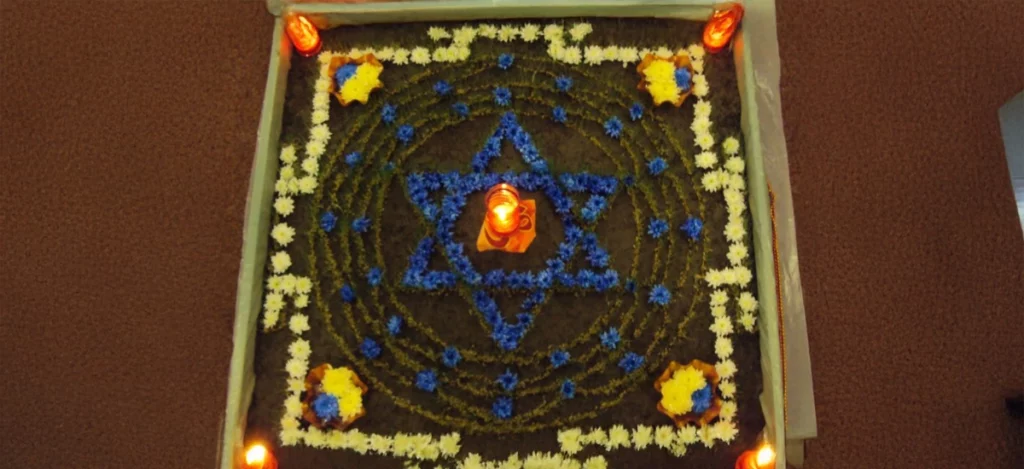
Dasha Maha Vidya The Ten Great Wisdoms Dasha Maha Vidya Yoga Dasha Maha Vidya Yoga, the “Yoga of the Ten Great Wisdoms,” is an essential element of Tantra Yoga. It consists of the adoration of the ten basic energies of manifestation and of our lives. The Universal Energies of eternity, compassion, space, knowledge, love, beauty,…
Mahasiddhis The Eight Great Paranormal Powers

Mahasiddhis The Eight Great Paranormal Powers Mahasiddhis—Great Perfections Yogic literature associates mahasiddhas with supreme spiritual liberation. In this context, a siddha is a realized being. However, siddhis are paranormal powers. The mahasiddhis (“great perfection” or “great accomplishment”) refer to a set of eight great paranormal powers. Another name for them is ashta siddhi (eight siddhis).…
Kundalini Shakti The Serpent Power

Kundalini Shakti The Serpent Power Kundalini Shakti—Primordial Energy Kundalini shakti is primordial cosmic energy, known as the Serpent Power. It is the fundamental life force and, at the same time, the supreme spiritual energy usually lying dormant and coiled three-and-a-half times around muladhara chakra at the base of the subtle spine. The word kundalini is…
Kumbhaka The Retention of the Breath

Kumbhaka The Retention of the Breath Retention—A Key to Inner Transformation Kumbhaka means “pot-like” and refers to retention, one of the phases of pranayama (conscious control and extension of breath). Retention is a condition without inhalation or exhalation that is associated with the act of increased awareness and the opening of the being toward subtle…
Karma Yoga The Yoga of Conscious Action

Karma Yoga The Yoga of Conscious Action Karma Yoga Is the Path of Service and Selfless Action This “yoga of [conscious and detached] action” teaches the value of not being egotistically attached to the outcome of our actions. The results are consecrated to a larger purpose—to the Divine, the Spiritual Heart, the Absolute (as it…
Jnana Yoga: The Yoga of Wisdom

Jnana Yoga The Yoga of Wisdom Jnana Yoga—Experiencing Direct Knowledge Jnana Yoga, the “yoga of direct knowledge,” is the yoga of wisdom, of inquiry into the Real Self—the path of the sage. This form of yoga dates back as far as the Upanishads and the Bhagavad Gita. It is often mistakenly considered the yoga of…
The Four States of Consciousness

The Four States of Consciousness The Four States of Consciousness—Beyond the Waking State Mandukya Upanishad is the source of the Hindu revelations about the Four States of Consciousness and defines these states as waking, dreaming, deep sleep, and turya (the fourth state, which is the state of enlightenment). The great yogi Shankaracharya said that this…
Yama Five Yogic Guidelines for Interacting with the Outer World

Yama Five Yogic Guidelinesfor Interacting with the Outer World Yama means “control” or “restraint” and is the first stage of Patanjali’s Ashtanga Yoga (the eightfold path). The yama are five guidelines for interaction with the “external” world. Their practice is considered essential for success on the yogic path. The Five Yama Are: Ahimsa (non-harming) Satya…
Vayus The Five Vital Airs

Vayus The Five Vital Airs Vayus—Gatekeepers to the Infinite In Sanskrit, vayu means “Air,” “breath,” or “wind.” According to the yogic tradition, in pranamaya kosha (the etheric body) prana divides into five vayus (principal breaths or vital airs) according to its movement and direction. In the Chandogya Upanishad (2:13:6), the vayus are referred to as…