

Ramana Maharshi : À propos de la nature spontanée – Sahaja
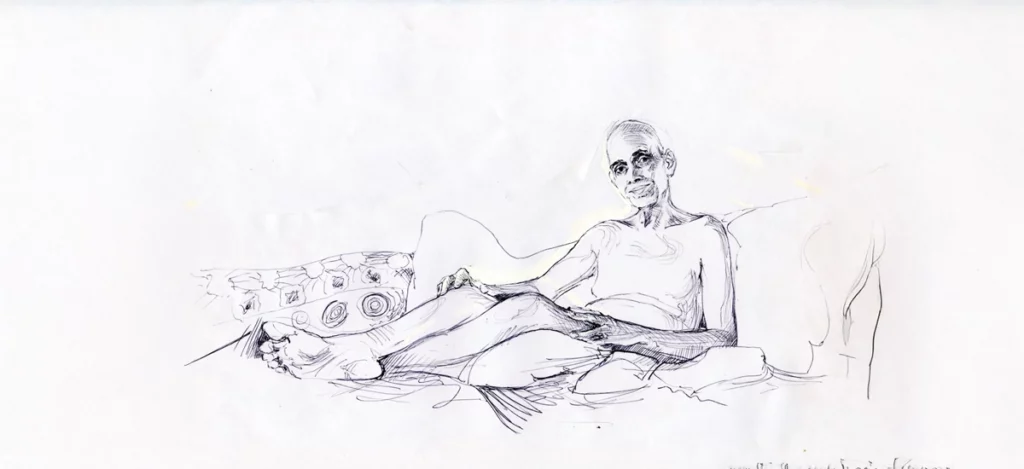
Ramana Maharshi shares the following insights about sahaja, naturalness: Meditation is your true nature. You call it meditation, because…
Ramana Maharshi – L’abandon
Ramana Maharshi, le grand maître de l’Advaita Vedanta, répond aux questions suivantes sur l’abandon : Q : L’abandon est impossible. R : Oui, l’abandon complet est impossible au début. L’abandon partiel est certainement possible pour tous. Avec le temps, il mènera à l’abandon complet. *** Q : L’abandon partiel… eh bien… peut-il annuler le destin ? R : Oh, oui ! Il le peut. *** Q : Comment […]
Ramana Maharshi — Sphurana, le frémissement sacré du Cœur
What is sphurana? Sphurana is felt on several occasions, such as in fear, excitement, etc. Although it is always and all over, yet it is…
Ramana Maharshi – À propos de la méditation
How does one meditate? What is meditation? It is commonly understood to be concentration on a single thought. Other thoughts are kept out…
À propos de la méditation — Vous pouvez contrôler vos pensées
Ramana Maharshi shares the following wisdom about meditation and how to control your thoughts: No meditation on any kind of object is help…
L’éveil de Ramana Maharshi – A propos de la première Quête de Soi
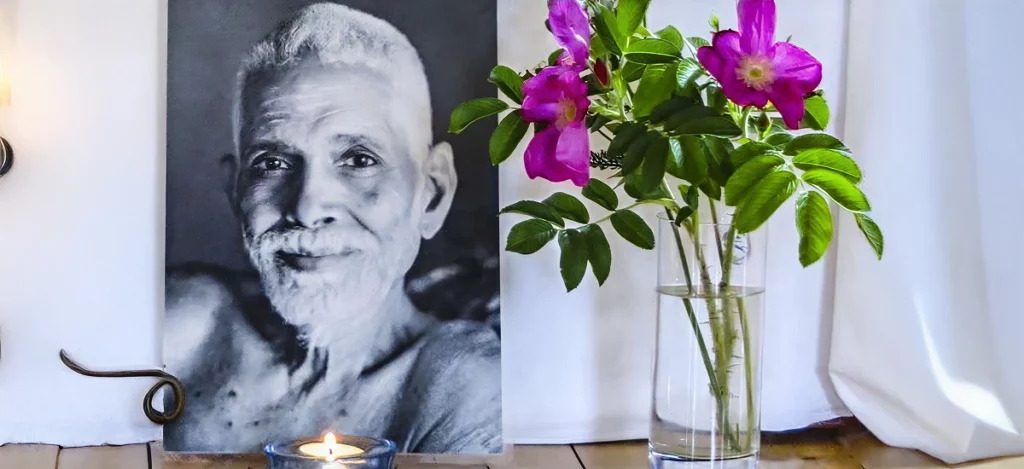
The ‘I’ or my ‘self’ was holding the focus of attention by a powerful fascination from that time forwards. Fear of death had vanished once…
Ramana Maharshi : Qu’est-ce que Dhyana — Méditation ?
D : Qu’est-ce que dhyana ? M : Le mot dhyana signifie généralement la méditation sur un objet, tandis que nididhyasana est utilisé pour l’investigation du Soi. Les triades persistent jusqu’à la réalisation du Soi. Dhyana et nididhyasana sont identiques pour l’aspirant, car ils impliquent la trinité et sont synonymes de bhakti. *** D : Qu’est-ce que dhyana ? M : Dhyana consiste à se […]