


“Darkness within darkness.
The Gateway to all understanding.”
–Lao Tzu
Dark Retreats are an ancient practice from the Ayurvedic and Tantric traditions. In such retreats, your teacher is darkness itself. You enter a room specially designed to admit no light and spend a number of days in darkness in order to reveal your inner light.
It is an experience like no other and brings about a profound shift in consciousness. Read more about Darkness Retreats below and experience one for yourself.
“Is Kali, my Mother, really black?
The Naked One, of blackest hue,
Lights the Lotus of the Heart…”
–Ramakrishna
Read more
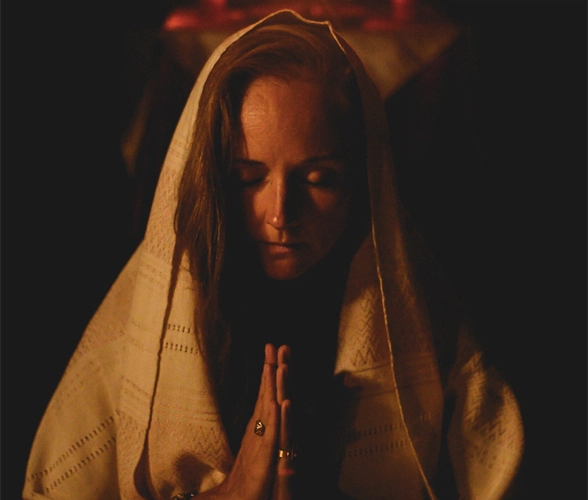
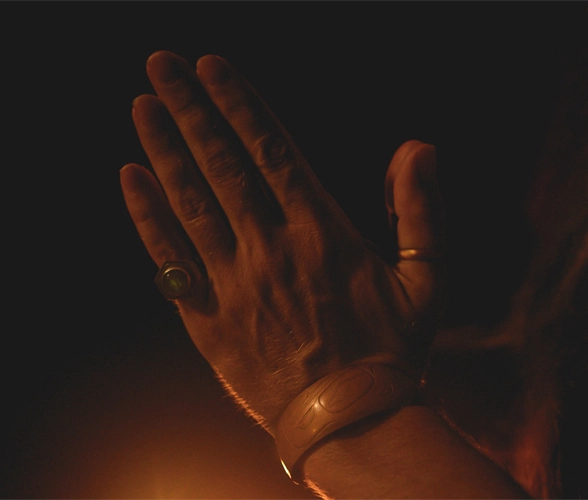
“Being in the Dark Room is a lot like being anywhere else, except that certain realities are much more obvious. It is the closest experience to Pure Existence, absolutely simple and vast and luminous all at the same time. In the dark, meditation is not something you do, but something you are.”

Dark Room Meditation Retreats:
The Hridaya Perspective
Dark Room Meditation Retreats are a practice that can inspire profound shifts of consciousness, the prospect of spending days alone in complete darkness is daunting for some new to the experience. Below, we offer more background to explain the beautiful process that unfolds in the Dark Room.
From the Hridaya Yoga perspective, darkness and the abyss are nothing to fear, because who we really are is the very essence of both Darkness and Light. There are no animalistic tendencies at the bottom of our being. Even if it may seem like this for some people, nirvana is there, and the Supreme Self, Consciousness, is its background. Sometimes, the darkness of anguish or desperation or fear of death can instantaneously reveal Pure Awareness, nonconceptual bliss. This is because of a quantum leap between what seems to be the bottom and the top.
Darkness also indicates the ultimate act of unification, mystical marriage. The abyss is as much topless as bottomless.
In the Bhagavad Gita, it is the immortal, Krishna, who is “dark,” while Arjuna, the mortal, is “white.” They are symbols of the Supreme Self and the individual ego.
In India, retreats in darkness are usually called Kaya Kalpa. The term kaya means “body,” and kalpa means “ageless,” or “immortal.” Kaya Kalpa means “ageless body” (or “body fashioning”).
Kaya Kalpa is an Ayurvedic treatment for rejuvenating the body, calling for seclusion in darkness, meditation, and the application of various herbal concoctions. It can even be seen as a form of yoga. Ayurvedic medicine was developed in South India at about the same time as Hatha Yoga.
Kaya Kalpa has three main objectives:
- Slowing the aging process
- Maintaining excellent physical health and youthful vitality
- Delaying physical death until one achieves jiva mukta, “spiritual liberation” (from the effects of karma)
In Hridaya Yoga (as in Jnana Yoga, in general), the primary purpose is not the physical body’s rejuvenation, but the direct understanding that we are not just the physical body. So, we do not refer to Kaya Kalpa, but Dark Retreats, as adepts of Tibetan Dzogchen call the practice.
Of course, even though this is not our purpose, the rejuvenation of the physical body during such a retreat occurs naturally. Because of this, we’ll mention some of the physical and psychic effects of remaining in darkness, as they relate to brain chemistry.
According to Mantak Chia (in Darkness Technology):
“The darkness actualizes successively higher states of divine consciousness, correlating with the synthesis and accumulation of psychedelic chemicals in the brain. Melatonin, a regulatory hormone, quiets the body and mind in preparation for the finer and subtler realities of higher consciousness (Days 1 to 3). Pinoline, affecting the neuro-transmitters of the brain, permits visions and dream-states to emerge in our conscious awareness (Days 3 to 5). Eventually, the brain synthesizes the ‘spirit molecules’ 5-methoxy-dimethyltryptamine (5-MeO-DMT) and dimethyltryptamine (DMT), facilitating the transcendental experiences of universal love and compassion (Days 6 to 12).
Melatonin, the ‘sleep molecule,’ is produced in the pineal gland, in response to the darkness of night, and to the circadian rhythms of light and dark that are programmed into the hypothalamus, an endocrine gland located deep within the brain. Melatonin affects major organ systems, quieting the sympathetic nervous system and allowing daily rejuvenation of mind and body.
In the Dark Room, melatonin gradually accumulates in the brain.”
The yogis associated the fluid of eternal life, soma, with the moon’s energy, an essential vital energy that charges the human being during the night and which is “burned” by the inner sun. (This burning provides the energy manifested during wakefulness, in our daily actions.) In this case, day symbolizes all dualisms and the personal domain of action, of dispersant energy, while night is the symbol of eternity, contemplation, regeneration, and centeredness.
In mystical theology, Darkness or Night is the symbol of the apophatic Spiritual tradition. It is the “neti, neti” of the Upanishads. It is the disappearance of all knowledge, which may be defined, analyzed, or expressed. Further, Darkness means the state of being deprived of all proof and psychological support. Night suggests “emptiness” or “nakedness” that purifies the mind, eliminating the “dryness” or “aridity” of rational thinking, bringing sacred longings, sensual emotions, and even the highest aspirations.
Deprived of light, the individual is dispossessed of all. This is the doctrine of privato boni. Memories cannot help us grasp the current situation. The individual is said to be in the cloud of unknowing. St Dionysius referred to it as divine darkness, the nigredo of the alchemists.
The Dark Room Meditation Retreats have significant correspondences in alchemical work: Alchemical “work” began with Nigredo or blackness. This first phase in alchemy means putrefaction or decomposition. As a first step to the philosopher’s stone, all alchemical ingredients had to be cleansed and cooked extensively to form a uniform black matter. This is a death and a return to formless chaos, leading to the white phase and finally to Rubedo, the red phase of spiritual freedom. Albedo is referred to as ablution, or the washing away of impurities by aqua vitae (the Water of Life).
The journey into Darkness is not just a first stage but is the essence of spiritual alchemical work. Without it, the individual will remain only at the superficial level of mere rational thinking and social existence, dominated by dogmas. There is an essential alchemical adagio:
Visita Interiora Terrae Rectificando Occultum Lapidem (“Visit the interior of the Earth; rectify what you find there, and you will discover the hidden stone.”) To describe the “descent into Darkness,” summed up in the word “vitriol,” alchemy has preserved some very ancient symbols.
Individuals (actually only their personalities) descending into their original nature will suffer a significant loss. They must abandon all existing moral, social, and spiritual values. In this way, they open to a different order, more in tune with the Harmony of the Whole.
This is what happens in a Dark Retreat.
Being fully aware in a Dark Room is like becoming conscious in the “night” or “forgetfulness” of deep sleep. In the book I Am That, Nisargadatta Maharaj explains that even in deep sleep the Knower (the Supreme Witness) is present:
“Q: In sleep there is neither the known, nor the knower. What keeps the body sensitive and receptive?
M: Surely you cannot say the knower was absent. The experience of things and thoughts was not there, that is all. But the absence of experience too is experience. It is like entering a dark room and saying: ‘I see nothing.’ A man blind from birth knows not what darkness means. Similarly, only the knower knows that he does not know. Sleep is merely a lapse in memory. Life goes on.”
In a Dark Room Meditation Retreat, as in a deep sleep, the whole objective world disappears. But it remains the Witness “surrounded” by nothingness. We are aware of this nothingness. Eventually, in this Nothingness, the Witness is revealed as its very nature. Then, it is still Nothing, but the Nothingness is not meaningless anymore, or just a lapse in memory, but is full Awareness, the Witness.
Osho also offers insights about Darkness and the need to surrender to it. He speaks about the “negative darkness,” a concept that describes the “dark part of our being” (the fears associated with our subconscious world). In contrast, the “real darkness” is transcendental, bringing nirodha parinama, a profound transformation of our subconscious domain.
Speaking about the superiority of darkness compared to light, he emphasizes the worldly light’s relative symbolism. (Like Absolute Darkness, Absolute Light can be a symbol of transcendence. In the Supreme, there is no difference between Darkness and Light. It is both Darkness and Light.)
“Why has God been symbolized everywhere as light? Not because God is light, but because man is afraid of darkness. This is human fear—we like light and we are afraid of darkness, so we cannot conceive God as darkness, as blackness. This is human conception. We conceive God as light because we are afraid of darkness.”
“If you can love darkness you will become unafraid of death. If you can enter into darkness – and you can enter only when there is no fear – you will achieve total relaxation. If you can become one with darkness, you are dissolved, it is a surrender. Now there is no fear, because if you have become one with darkness, you have become one with death. You cannot die now. You have become deathless.”
“First, a deep friendship with darkness is needed.”
“So do one thing as a preliminary step: sit in darkness, put off the lights, feel darkness. Have a loving attitude towards it; allow the darkness to touch you. Look at it. Open your eyes in a dark room or in a dark night; have a communion, be together, imbibe a relationship.”
“First uncover your unconscious fears and try to live and love darkness. It is very blissful. Once you know, and once you are in contact with it, you are in contact with a very deep cosmic phenomenon.”
“Boundaries exist because of the light. When the light is not there, boundaries are dissolved. In blackness nothing is defined, everything merges into every other thing. Forms disappear.”
“Contemplating, meditating, merging… Darkness takes away all distinctions. In the light you are beautiful or ugly, rich or poor. The light gives you a personality, a distinctness — educated, uneducated, saint or sinner. The light reveals you as a distinct person. Darkness envelops you, accepts you – not as a distinct person; it simply accepts you without any definitions. You are enveloped and you become one.”
“When darkness enters you, you enter into it. It is always reciprocal, mutual.” –Osho, The Book of Secrets
During Dark Room Meditation Retreats, we should do some meditations with open eyes and others with closed eyes. We should continuously maintain the Witnessing Attitude, asking the question “Who am I?.” Here, it is even more important not to dramatize or let ourselves be taken over by imagery. In this way, we develop the capacity of witnessing any thought, sensation, or emotion that may arise. Our attention is on the darkness as the expression of the Absolute.
Traditionally, Dark Retreats were done by advanced practitioners in the Dzogchen lineages of Tibetan Buddhism, and the period varied from a few hours to decades. Some Tibetan monks recommend a 49-day Dark Retreat. This period was recommended only to advanced practitioners because such a retreat requires stability in the natural state.
Some historians suggest that Ancient Egyptians and Mayans practiced Dark Retreat as well, traditionally lasting ten days. Holy men would enter into the center of their respective pyramids, wholly removed from light and sound. The catacombs and the underground network of tunnels of the first Christians in Rome and many other places, such as the Pyramids of Egyptians and the Essenes’ caves near the Dead Sea in Israel, might have been used as places for Dark Retreats as well. In the Taoist tradition, the cave, the Immortal Mountain, the Wu San, represents the Perfect Inner Alchemy Chamber. The Tao says: “When you go into the dark and this becomes total, the darkness soon turns into light.”
For beginners, we don’t recommend Dark Room Meditation Retreats longer than seven days.
In this way, our subconscious is unloaded. It is similar to how active and passive impressions (psychological residues, samskaras) are released in dreams during the night.
Apparently paradoxically, this Pure Darkness will absorb many of our obscure traits, psychological “darkness,” and fears arising from the lack of awareness.
As black holes absorb enormous quantities of matter, the darkness of transcendence can absorb our limited personal emotions and psychic residues.
It is good to get enough sleep in the days leading up to a Dark Retreat. Generally, people start such a retreat by sleeping a lot. There is nothing wrong with this—it’s a natural process that comes with relaxation and entering in tune with Nature’s universal rhythms. But it would be good also to have long sessions of meditation.
The schedule might be similar to that of a Hridaya Silent Meditation Retreat, but this is just for orientation and is not at all compulsory. It is important to be free from the idea of having a strict schedule (which is related to the left, rational, cerebral hemisphere). A Dark Retreat should develop an intuitive attitude, related to the right cerebral hemisphere.
Awareness will increase, and there is no need to be afraid of boredom. Here, we’ll realize that boredom is a very relative concept because it is related to the desire and hunger for stimulation. Deep relaxation and awareness gradually eliminate this constant need for stimulation. In the Dark Room’s calmness, “the need” for reading, watching TV, working at a computer, or chatting with friends is gradually effaced and the subconscious tendencies begin to dissolve in the light of Consciousness.
Hatha Yoga is recommended, but it is better to be done in the contemplative Hridaya Yoga style, avoiding any forceful attitude.
By keeping the Witnessing Attitude, the patterns of the mind can be more easily objectified. Thus, the mind can be easily transcended. The awareness of the Spiritual Heart becomes more acute and reveals new dimensions of depth.
During the retreat, different images and visions might appear. Even if they seem fascinating or sacred, we keep the awareness of Awareness, asking “Who am I?” and “Who is the witness of all these visions?.”
Read an inspiring and informative article about an experience of 40 days in total darkness here.
Frequently Asked Questions
Dark retreats are meditation retreats in rooms completely devoid of light. In many religions, traditions, and medical systems (Hinduism, Tibetan Buddhism, Taoism, Christianity, Ayurveda, Hermeticism, ancient Greek medicine, etc.), they have been known to induce profound shifts in consciousness and to bring many beneficial effects.
In India, they are called Kaya Kalpa (“body transformation”) and are seen as a highly regenerative practice on the physical level. Since the purpose of such a retreat should be more than just bodily rejuvenation, we prefer the name “Dark Retreat.”
We invite you to deepen your meditation practice by experiencing a private retreat in our Dark Room in Mazunte, a suite especially prepared to admit no light and designed with a proper ventilation system and air conditioning. During the retreat, we can provide meals and other support for your spiritual practice.
Having a previous meditation practice (such as having attended a 10-day Hridaya Silent Meditation Retreat) is strongly recommended before starting a Dark Retreat.
To participate in a Dark Room Retreat at our center in Mexico, you must submit an application and have an interview with our Dark Room Coordinator. This helps ensure that the retreat is a good fit for your current process and intentions.
If this is your first Dark Room Retreat, we recommend you start with a minimum of 1-3 nights and a maximum of 7 nights. Once you build experience, you may be inspired to do longer and longer retreats—our students have done 2-, 3-, and even 7-week Dark Room Retreats, with profound results. We also recommend that you plan to spend a few days at our center before entering the Dark Room to get familiar with the community and begin to settle in.
A Dark Room Retreat is not guided—you will be able to create your own schedule and manage your own practice. As you will be completely alone during the retreat, it’s important that you already have a steady meditation practice.
Time in a Dark Retreat unfolds on all levels—physical, emotional, mental, and spiritual. Long periods of time free from visual and other external stimulation can allow for deep states of meditation. However, sometimes fears and negative emotions can arise. By centering in the Spiritual Heart and maintaining the Witnessing Attitude, you can detach from these limitations and transcend the mind. In this way, deeper dimensions are revealed, and you begin to taste the sweetness of Pure Existence. So, yes, it can be intense! But the more you focus on your practice and begin to surrender, the more relaxed and insightful the experience becomes.
Meditation is the best preparation for a Dark Room Retreat. If you are new to Hridaya Meditation, you can learn more about it here. We also suggest attending a 3- or 10-Day Hridaya Silent Meditation Retreat. These retreats share many beautiful practices and tools that will help you set a firm foundation for a Dark Room Retreat.
For inspiration, read an individual account of a 40-day Dark Room Retreat.
Dark retreats are meditation retreats in rooms completely devoid of light. In many religions, traditions, and medical systems (Hinduism, Tibetan Buddhism, Taoism, Christianity, Ayurveda, Hermeticism, ancient Greek medicine, etc.), they have been known to induce profound shifts in consciousness and to bring many beneficial effects.
In India, they are called Kaya Kalpa (“body transformation”) and are seen as a highly regenerative practice on the physical level. Since the purpose of such a retreat should be more than just bodily rejuvenation, we prefer the name “Dark Retreat.”
We invite you to deepen your meditation practice by experiencing a private retreat in our Dark Room in Mazunte, a suite especially prepared to admit no light and designed with a proper ventilation system and air conditioning. During the retreat, we can provide meals and other support for your spiritual practice.
Having a previous meditation practice (such as having attended a 10-day Hridaya Silent Meditation Retreat) is strongly recommended before starting a Dark Retreat.
To participate in a Dark Room Retreat at our center in Mexico, you must submit an application and have an interview with our Dark Room Coordinator. This helps ensure that the retreat is a good fit for your current process and intentions.
If this is your first Dark Room Retreat, we recommend you start with a minimum of 1-3 nights and a maximum of 7 nights. Once you build experience, you may be inspired to do longer and longer retreats—our students have done 2-, 3-, and even 7-week Dark Room Retreats, with profound results. We also recommend that you plan to spend a few days at our center before entering the Dark Room to get familiar with the community and begin to settle in.
A Dark Room Retreat is not guided—you will be able to create your own schedule and manage your own practice. As you will be completely alone during the retreat, it’s important that you already have a steady meditation practice.
Time in a Dark Retreat unfolds on all levels—physical, emotional, mental, and spiritual. Long periods of time free from visual and other external stimulation can allow for deep states of meditation. However, sometimes fears and negative emotions can arise. By centering in the Spiritual Heart and maintaining the Witnessing Attitude, you can detach from these limitations and transcend the mind. In this way, deeper dimensions are revealed, and you begin to taste the sweetness of Pure Existence. So, yes, it can be intense! But the more you focus on your practice and begin to surrender, the more relaxed and insightful the experience becomes.
Meditation is the best preparation for a Dark Room Retreat. If you are new to Hridaya Meditation, you can learn more about it here. We also suggest attending a 3- or 10-Day Hridaya Silent Meditation Retreat. These retreats share many beautiful practices and tools that will help you set a firm foundation for a Dark Room Retreat.
For inspiration, read an individual account of a 40-day Dark Room Retreat.
Pricing and Application
Practical Information:
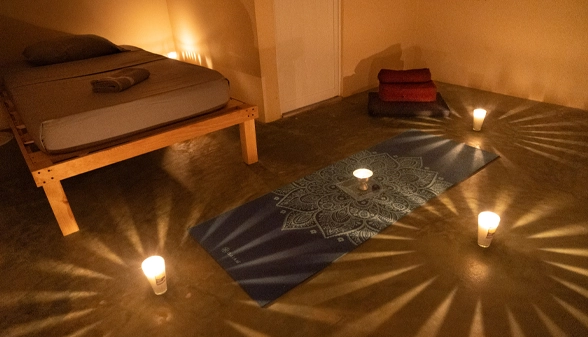
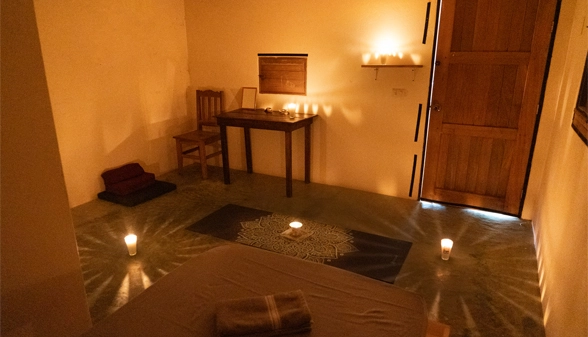
- Our center in Mazunte features an air-conditioned Dark Room ideal for personal retreats. It has a private bathroom, a ventilation system, a sealed box through which we can deliver meals without allowing light to enter, and plenty of space for practice.
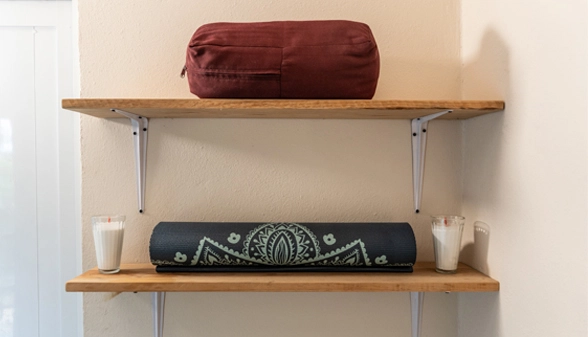
- We provide linens, a towel, drinking water, and toilet paper, and can offer yoga props, including cushions, a chair, a meditation bench, and a mat.
- A Hridaya teacher will greet you upon arrival, orient you to the Dark Room, and be available to answer questions. After the retreat, they will offer you a space to share about your experience.
- Check-in is at 6:00 pm, and checkout is at 10:00 am unless other arrangements have been made. (Note: A beautiful way to transition out of the retreat is to watch the sunrise. To facilitate this, upon request, we can arrange to have someone knock on the door before sunrise.)
- Read our complete list of frequently asked questions about Dark Retreats on the application, and email our Dark Room Coordinator with any questions.
Nightly Rates
1-30 Nights: $1,250 MXN per night
31+ Nights: $1,150 MXN per night
Nightly rates do not include food, but meal delivery is available. Breakfasts and dinners cost $135 MXN each.
Inspired?
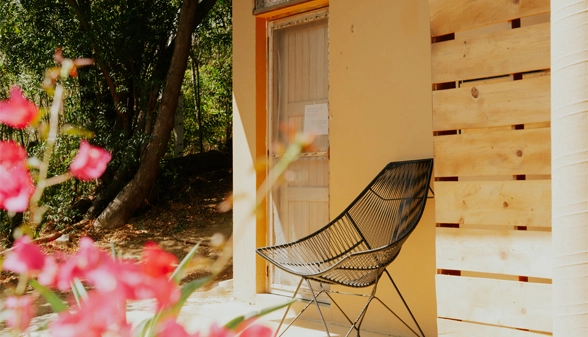

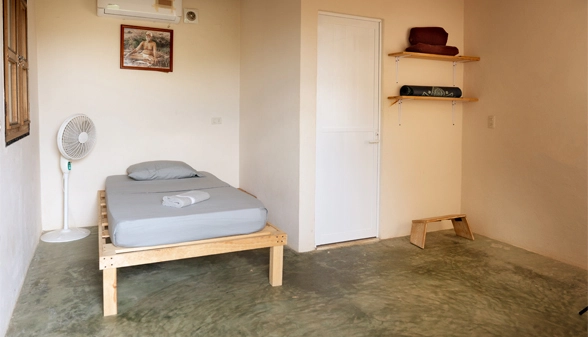
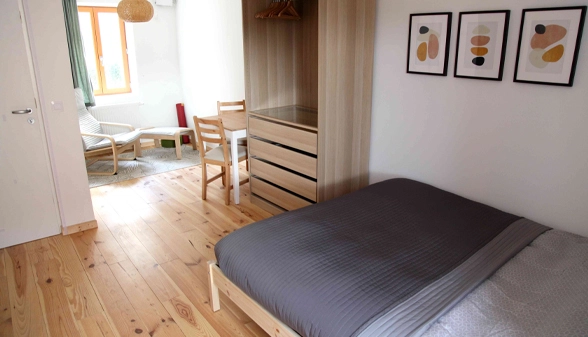
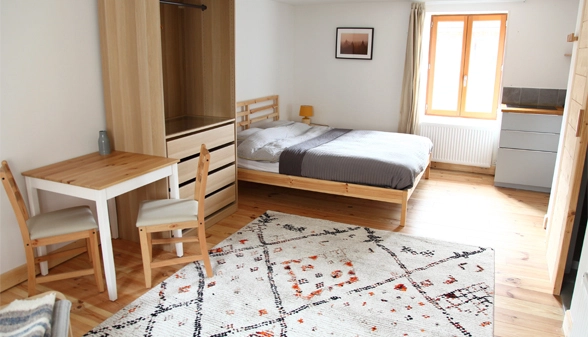
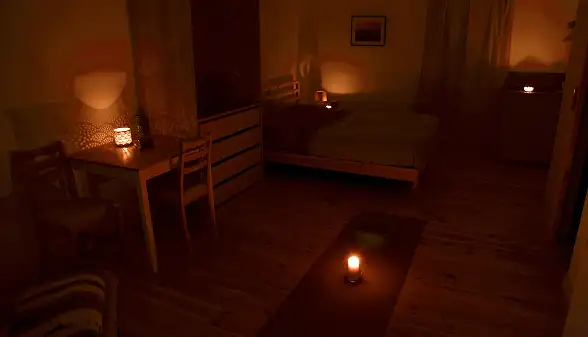
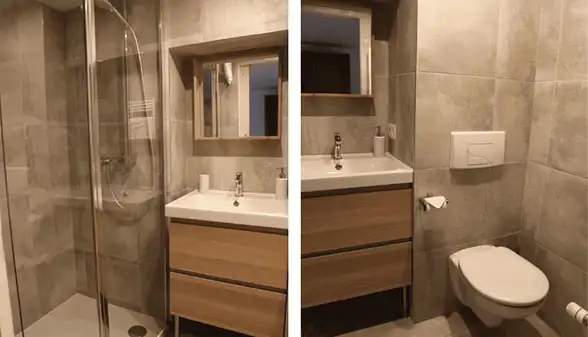
Dark Room Retreats are offered in the village of Saint-Just-d’Avray, near Hridaya France.
Please Note:
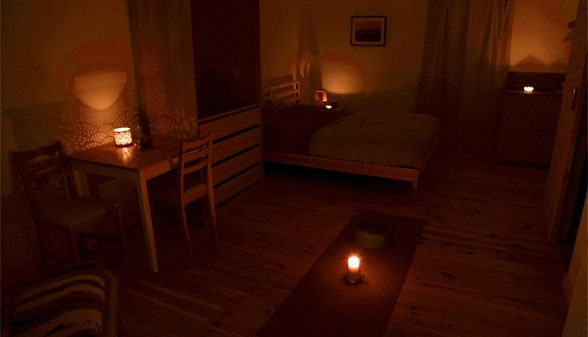
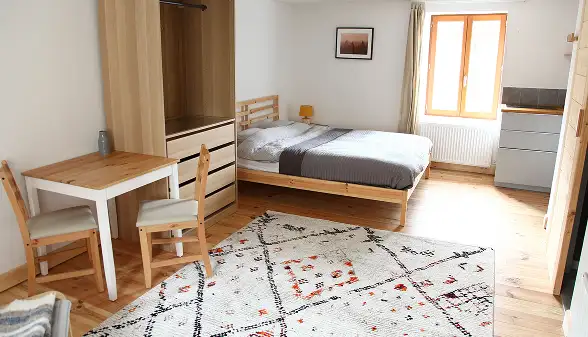
- Our two Dark Rooms are ideal for solitary retreats and were designed for this purpose. They feature good ventilation systems, comfortable queen-size beds, and bathrooms (shower, sink, and toilet). There is a “food box” through which meals can be served and notes may be sent to your host. Linens and towels are provided.
- Dark Room Retreats are meant to unfold in noble silence (mauna) to encourage interiorization.
- Before booking, please submit this application; we may contact you for an interview. You can begin the reservation process by emailing Bérengère or submitting the application form.
- View current Dark Room availability here.

Your Host
Bérengère is a teacher at Hridaya France. As your host, she will care for you during your retreat, providing meals if requested, answering your questions, and guiding you if the need arises. She will offer you an orientation session before the retreat and a post-retreat debriefing.
Nightly Rates
€80 per night for 2-3 nights
(2-night minimum)
€75 per night for 4-7 nights
€65 per night for 8-14 nights
Meals
All meals are vegetarian, organic, and made with love.
Breakfasts: €7 each
Lunches: €13 each
Cleaning
€30 one-time cleaning fee
Have a Question?

Get Inspired with These Articles
31 May 2023 ·

1.6k
The Dark Night of the Soul: When Fear Becomes a Blessing
21 Jan 2016 ·
1.6k
Reflections on a 40-Day Dark Retreat
6 Mar 2014 ·
1.6k
How to See in the Dark: The Science of Dark Retreats
Hridaya means “Spiritual Heart” and refers to the very essence of your being.
Whatever you call it, it’s that which calls you to look within.
Sign up for the Hridaya Newsletter to enliven your routine with exclusive, inspiring content that encourages you on the spiritual path.
This site is protected by reCAPTCHA and the Google Privacy Policy and Terms of Service apply.